Back to Articles
 Blog
Consumer Trends
The History of Vegetarianism & Plant-Based Regulatory Compliance in the UK
Blog
Consumer Trends
The History of Vegetarianism & Plant-Based Regulatory Compliance in the UK

Vegetarianism is having a moment. Figures from last year reveal that 14% of the UK population was following a meat-free diet by the end of 2025, equating to 7.7 million people. Of these, 5.5% of UK adults – approximately 3 million people – consider themselves vegetarians. What’s more, the general population is increasingly veg-curious, with 49% of Brits actively limiting their meat uptake or giving it up completely.
You could be forgiven, due to this recent growth in popularity, for thinking that vegetarianism in the UK is something of a recent phenomenon, but you might be surprised to learn that meat-free diets have deep historical roots within Britain. In fact, the modern vegetarian movement’s beginnings can be traced back to the early 19th century.
What’s also surprising is that when it comes to regulatory compliance, there is no specific statutory definition or standalone law governing food labelled as vegetarian or vegan. Despite various campaigns calling for vegetarian-specific regulations, this means that within the UK there is technically no legal requirement that vegetarian products must comply with beyond general food safety and consumer protection frameworks.
To find out why this is, it helps to understand where the modern vegetarian lifestyle has come from and how this has shaped vegetarian food standards over the years. We asked the experts at the Vegetarian Society to share their insights with us into the history of vegetarianism in the UK and how the Society was formed:
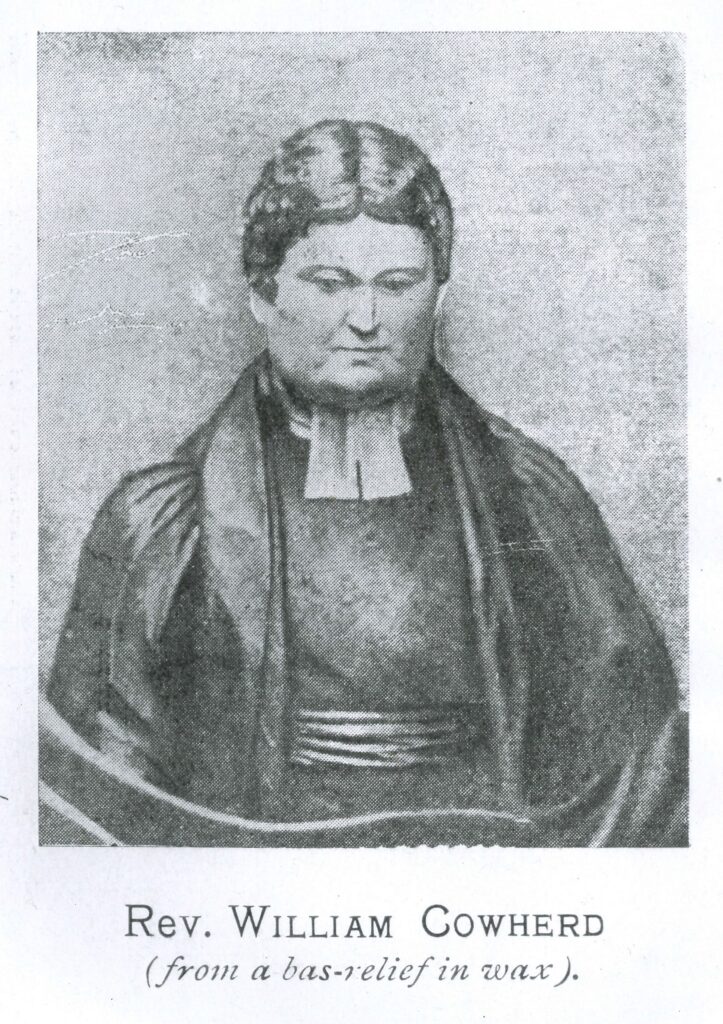
Vegetarianism has its longest European history in the United Kingdom. In the early 19th century, dietary choices were tied to both religious beliefs and a growing interest in health and wellness, with supporters viewing vegetarianism as a more ‘natural’ way of life. In 1809, Reverend William Cowherd founded the Bible Christian Church, where he promoted a vegetarian lifestyle as a central tenet of the faith.
This idea spread, and in 1847, the Vegetarian Society was formed, with the inaugural meeting occurring on 30th September at Northwood Villa in Ramsgate. Joseph Brotherton, MP for Salford, chaired the very first meeting; William Horsell – a Hydrotherapist – became its Secretary; James Simpson, from the Bible Christian Church, its President; and William Oldham, the manager of Alcott House, its Treasurer.
Defining what vegetarianism meant – and who should represent it – was a thorny subject amongst the movement’s supporters. In 1887, The London Vegetarian Society was formed as a breakaway from the main society. This was funded by Arnold Hills, a wealthy ironworks owner and founder of Thames Ironworks United, a fully vegetarian football team who later turned professional – changing their name to West Ham United.

Perhaps one of the most well-known members of The London Vegetarian Society was Mahatma Gandhi. His time spent as part of the Society is thought to have led Gandhi to see a vegetarian diet not just as something central to his Hindu religion, but also as a moral imperative and key to his philosophy of non-violent struggle.
The issue of vegetarianism with or without eggs and dairy was also a topic of regular debate throughout the Society’s history. So, in 1944, Society member Donald Watson proposed that a separate group be set up for members following the dairy and egg-free diet, resulting in the formation of the Vegan Society.
Around this time, many people in Britain changed to plant-based diets out of necessity. World War II rationing meant that meat was in short supply, and many citizens adopted predominantly vegetarian diets as a result, with root vegetables, legumes, and grains making up the shortfall. In 1945, it’s estimated that there were around 100,000 vegetarians in the UK.
The 1960s marked the start of the mainstream vegetarian movement in the UK, with the counterculture around environmental awareness, anti-capitalism, and nonviolence leading to an increase in the number of vegetarians.
The Manchester and London Vegetarian Societies had co-existed for many years, but in 1969 they unified as one Vegetarian Society for the whole of the UK, established at the headquarters in Parkdale, Altrincham.
In 1969, the Society also launched its first trademark – believing that the growing numbers of vegetarians needed a way to quickly know which foods were suitable for their diets. This also offered brands a clear labelling system that would allow them to build trust with their customers.
Thinking that the movement needed a way to broaden the culinary horizons of people who were considering vegetarianism, the Society also founded a cookery school at its former base in Altrincham in 1982. This was followed by the launch of major campaigns like National Vegetarian Week in 1991. Vegetarianism was becoming increasingly accepted and understood throughout the country by this point, and the society’s work in supporting the movement led to the McCartney family becoming patrons in 1995.
With the growing success of the trademark scheme and a massive growth in the popularity of meat-free diets, 2017 saw the Vegetarian Society register its first vegan trademark, and in 2024 the first Plant-Based certification followed.
 ______________
So, whilst there’s no official set of laws attached to it, it’s clear that the vegetarian lifestyle has a long-established history within the UK. As it continues to grow in popularity, many businesses have sought to adapt their products to meet the growing demand. By launching the UK’s first independent vegetarian auditing standard in the form of an approved trademark in 1969, the Vegetarian Society created a way to ensure this can be carried out accurately and ethically.
Nowadays, through its three certification schemes, the Society is able to confirm that products comply with relevant vegetarian, vegan, and plant-based standards, making certain that consumer expectations are met by any products bearing these trademarks on the label.
To gain approval, manufacturers must submit a full ingredients list to the Society and prove that each product meets the specifications of the applicable scheme. These specifications include measures to avoid cross-contamination during production, GMO-free requirements, and compliance with the Society’s animal-testing criteria. Vegetarian certification also requires any eggs used to be free-range, whilst vegan and plant-based certification stipulates that products contain no animal-derived ingredients. In addition, the plant-based certification requires the characterising ingredient(s) to be plant-based. Over time, these have become widely recognised trademarks for meat-free foods, helping consumers quickly identify products that meet the strict criteria.
But are there any UK regulations or laws that provide further protection to vegetarian consumers? The truth is that whilst no formal vegetarian regulations exist, there are several food safety standards that serve to ensure the UK’s vegetarian population isn’t faced with a guessing game every time they pop to the shops.
Right before the Vegetarian Society’s trademark was released, the Trades Description Act made it a criminal offence for any false or misleading descriptions to be given for goods – in this case, a food product could not be described as vegetarian if it contained any meat or fish.
In the Food Safety Act of 1990, it was made the legal responsibility of businesses to ensure that any food they sold or produced was “of the nature, substance, or quality” expected by consumers. Food products also had to be accurately and honestly labelled, with no presentation or advertising allowed that was “false or misleading”.
In 2004, the UK government brought in the General Food Regulations to enforce EU Regulation 178/2002. This made it illegal to use labelling to mislead customers and prohibited packaging and marketing from tricking consumers about the nature, properties, composition, origin, or method of manufacturing for food products.
With no official definition of vegetarian or vegan food, the FSA launched a labelling guide for businesses to follow to ensure that these terms were used correctly and consistently across packaging. The guidance, which was developed in consultation with the Vegetarian Society, also helped to identify common labelling errors and misleading descriptions, and set out clear criteria for creating accurate food labels.
The 2014 Food Information Regulations enforced EU Regulation 1169/2011 in the UK, in which vegetarian and vegan food labels were classed as voluntary information. Under the regulations, all voluntary claims must be accurate, clear, and not misleading to consumers.
Under 2015’s Consumer Rights Act, any product – including food and drink – must be of satisfactory quality, fit for purpose, and as described, meaning that any business selling food as vegetarian must be able to prove the product meets the consumer’s understanding of the term.
Natasha’s Law was introduced in October 2021. This regulation applies to all pre-packaged foods sold directly to consumers and requires businesses to clearly display all ingredients and highlight common allergens. Whilst the law is aimed at allergen labelling, it means that animal-derived ingredients such as milk, eggs, fish, molluscs, and crustaceans must be disclosed, making it easier for consumers to identify whether products are vegan or vegetarian.
Under previous consumer protection rules, a consumer had to prove a misleading description of a product actively changed their buying behaviour. The DMCCA removes this barrier. It is now an automatic infringement to omit “material information” regarding product characteristics, ingredients, or dietary suitability from an “invitation to purchase” (such as an online menu, social media ad, or supermarket product listing).
As the vegetarian diet continues to gain ground due to ethical, environmental, and health concerns, it’s important that food businesses recognise the importance of accurate product labelling and transparent marketing for products aimed at this demographic.
Even though there are no vegetarian-specific laws and regulations to adhere to, brands and retailers must comply with a range of food safety standards, allergen regulations, and general consumer protection laws that work together to ensure any food presented as vegetarian must not be made from or with products derived from farmed, wild, or domestic animals that have died or been slaughtered.
By failing to follow these guidelines, businesses risk losing customers, damaging their brand’s reputation, being forced to recall products, undergoing formal investigations and prosecution, paying for expensive packaging redesigns, and being subject to ongoing enforcement measures.
To ensure your business doesn’t make these costly mistakes, our regulatory experts are on hand to support you with clear and compliant vegetarian food labelling, formulation checks, regulatory adaption, marketing reviews, and more.
Get in touch with our specialist team today to find out more about how we can help you create, label, and launch fantastic products that get it right first time whilst winning over vegetarians and meat-eaters alike.
Looking for a way to take your meat-free product packaging further? Visit the Vegetarian Society’s website to learn more about their independent vegetarian, vegan, and plant-based product certification schemes.